

Introduction
Brushing is the most familiar part of any oral care routine, yet it remains the most misunderstood. Many adults and children in Tirunelveli spend less than a minute at the sink and assume their teeth are clean. Knowing the right duration to brush plays a key role in protecting your teeth from decay, gum problems and expensive treatments down the line. At Vetri Dental Clinic, we frequently see patients whose dental concerns trace back to rushed brushing or incorrect movements. This article walks you through the recommended duration, the correct technique and the small changes that can transform your daily routine into genuine dental care.
How Long Should You Brush Your Teeth?
The dentist recommended brushing time is two full minutes, performed twice a day. This may feel longer than what most people are used to, and that gap is exactly why plaque often remains on the back teeth and along the gumline. Two minutes gives you enough time to clean every surface without scrubbing harshly. Think of it as roughly thirty seconds for each quadrant of your mouth, allowing balanced coverage from molars to front teeth.
Why Two Minutes Is the Standard
The two-minute rule reflects the practical time needed to disturb the bacteria stuck on your enamel physically. Anything shorter usually means certain surfaces are skipped entirely, especially the inner sides of the lower front teeth and the chewing surfaces of the back molars. Using a small timer, a song you enjoy, or an electric toothbrush with a built-in timer can help you reach the full duration without guessing.
How Often Should You Brush Your Teeth?
Brushing twice daily, once after waking and once before sleeping, remains the most reliable schedule. The night session matters more than many people realise, because saliva production slows during sleep, allowing bacteria to multiply on unclean teeth. Some patients ask whether brushing after every meal is better. In reality, brushing immediately after acidic foods or drinks can wear down softened enamel, so waiting around half an hour is gentler and more effective.

The Brushing Technique That Actually Works
Time alone does not guarantee clean teeth. The correct way to brush teeth involves angle, pressure and movement working together. A common belief is that harder scrubbing removes more plaque, but the opposite is true. Aggressive brushing thins the enamel and pushes the gums back, leaving teeth more sensitive over the years.
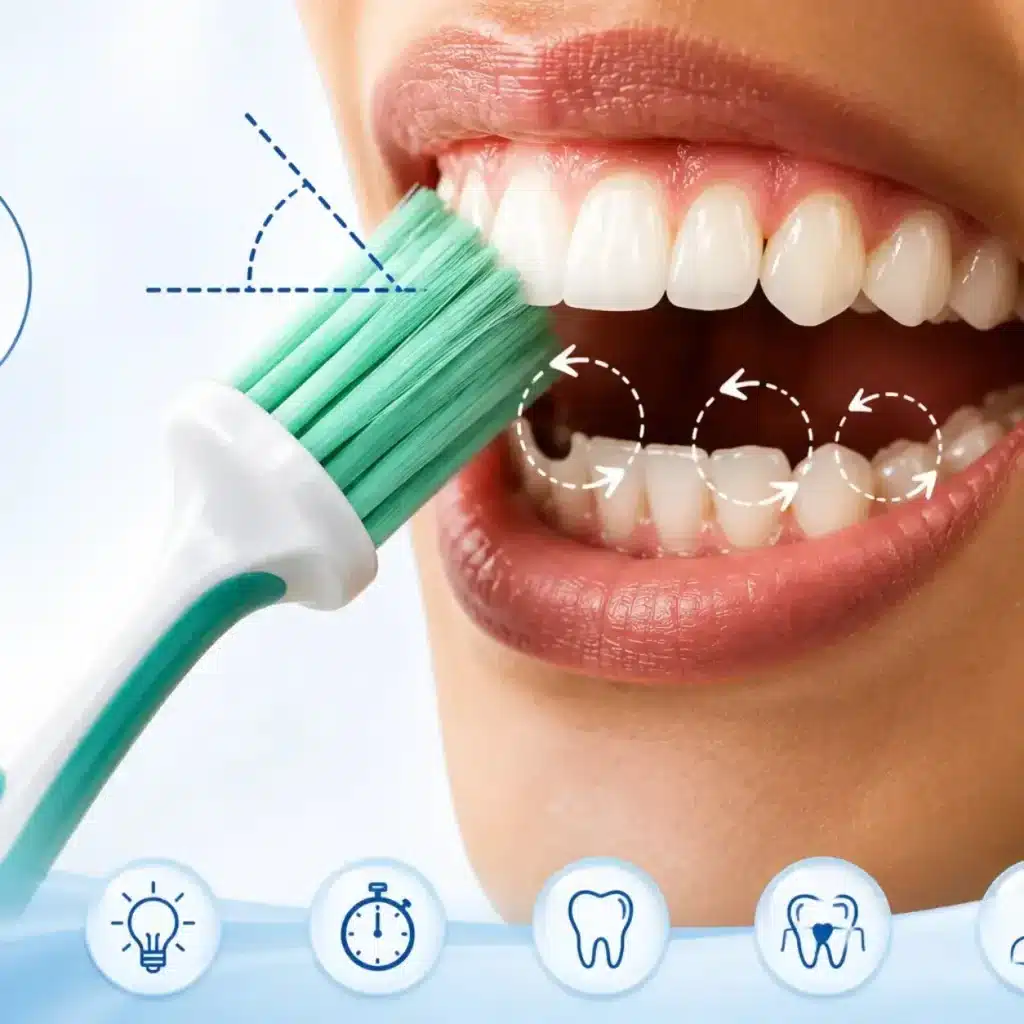
Hold your brush at a forty-five-degree angle to the gumline. This position allows the bristles to reach where plaque tends to gather. Use small, gentle circular motions rather than long sideways strokes, which can scrape the enamel near the gums. Move methodically through your mouth, covering the outer surfaces, the inner surfaces and finally the chewing surfaces. Finish with a soft sweep across the tongue to reduce bacteria that contribute to bad breath.
Helping Children Build the Habit Early
Younger children rarely have the coordination for thorough brushing on their own. Until around age seven or eight, parents should guide or supervise the routine. A small soft-bristle brush and a tiny amount of age-appropriate fluoride toothpaste work best. Keeping the process calm and consistent helps children associate brushing with comfort rather than struggle. If your child develops early sensitivity, staining or resistance to brushing, the kids dentistry team at Vetri Dental Clinic can offer gentle guidance suited to their age.
Choosing the Right Tools for Your Mouth
A good brushing routine depends on the right equipment. A soft-bristle toothbrush is suitable for most adults because it cleans effectively without irritating the gums. Medium and hard bristles often cause more harm than benefit. Replace your brush every three months, or sooner when the bristles begin to splay outward. Worn bristles lose their ability to clean properly and may even scratch the enamel.
Fluoride toothpaste continues to be a trusted choice for strengthening enamel and reducing the risk of cavities in both adults and children. After brushing, spit out the toothpaste but avoid rinsing the mouth heavily with water. Allowing a thin layer of fluoride to remain on the teeth offers added protection through the day and night.
Manual or Electric Brush?
Both options can clean teeth thoroughly when used the right way. Electric brushes can be especially helpful for patients with braces, limited hand strength or a habit of brushing too quickly. Manual brushes remain equally capable when paired with proper technique and the full two-minute duration. The most important factor is consistency. The best toothbrush is the one you genuinely use well, twice every day.
Common Brushing Mistakes Most People Miss
Even patients who brush regularly often repeat small mistakes that quietly affect their oral health. Brushing too fast is the most widespread issue, followed by applying excessive pressure. Many people also forget the gumline, which is where plaque collects most stubbornly. Skipping the inner surfaces of teeth, especially behind the lower front teeth, allows tartar to form there over time. Brushing right after consuming citrus fruits, fizzy drinks, or pickles can weaken enamel that has been temporarily softened by acid.
Another overlooked habit is using the same brush for too long. A brush with frayed bristles cleans poorly and may cause gum irritation. If you have not changed your brush in several months, that small adjustment alone can improve your oral hygiene noticeably.
Building a Complete Oral Care Routine
Brushing covers most of the tooth surface, but not all of it. The spaces between teeth need cleaning with floss or an interdental brush to remove plaque that the toothbrush cannot reach. Cleaning the tongue gently each morning helps freshen breath and reduce bacterial buildup. A mouthwash can be useful when recommended by a dentist for specific concerns, such as gum inflammation or sensitivity.
Routine dental checkups every six months allow your dentist to spot early signs of decay, alignment issues or gum problems before they grow into bigger concerns. Professional cleaning removes hardened tartar that even the most disciplined home routine cannot eliminate.
Signs Your Routine Needs Attention
Pay attention if you notice bleeding gums during flossing, lingering bad breath despite good hygiene, sensitivity to hot or cold foods, or visible plaque near the gumline. Swollen or tender gums are another early warning. These signs often indicate that the technique or tools need adjusting, or that a professional cleaning is overdue. Addressing them early helps prevent the need for treatments like root canal treatment or gum therapy.
When to Reach Out to Vetri Dental Clinic
Even the most careful brushing routine benefits from regular professional support. If you experience tooth pain, gum discomfort, alignment concerns or simply want personalised guidance on your daily care, the team at Vetri Dental Clinic is ready to help. Families across Tirunelveli trust our practical, patient-centred approach to preventive dentistry, kids dentistry, teeth cleaning, tooth filling and a wide range of treatments suited to every age group.
Conclusion
Good oral health begins with the small habits practised twice every day. Brushing for the full two minutes, using a soft brush at the correct angle and avoiding the common mistakes that most people overlook will protect your teeth for years to come. Pair your routine with regular dental checkups, gentle interdental cleaning and timely advice from your dentist. If you have any concerns about your brushing habits, sensitivity or gum health, the friendly team at Vetri Dental Clinic is always here to support your smile with trusted dental care.