

Introduction
Tooth pain has a way of hiding its true cause. A crack and a cavity are two very different problems, yet they can produce strikingly similar discomfort, and both can lead to the very same treatment. This is why many patients are unsure whether they are dealing with damage or decay. A root canal for cracked tooth situations and one for a deeply decayed tooth follow the same idea, but start from different places. Here in Tirunelveli, people often arrive at the clinic unable to say which problem they have. In some cases, root canal treatment for damaged teeth may be recommended once an examination reveals that the pulp inside the tooth has been affected.
How Cracks and Cavities Damage Teeth in Different Ways
Although both problems can eventually lead to similar symptoms, they begin in very different ways. Tooth decay is caused by bacteria gradually wearing away the tooth over time, often starting as a small cavity that slowly becomes deeper. A crack, by contrast, is physical damage to the tooth structure itself, usually caused by injury, grinding, or biting on something hard.
In practical terms, decay often develops quietly, while a crack is more likely to cause sudden discomfort when biting or chewing. Different causes, but both can become serious if left untreated.
How Tooth Decay Reaches the Nerve
Decay is a slow and quiet process. It begins when bacteria feed on sugars left on the teeth and release acids that gradually wear away the hard enamel. Over time, this forms a cavity that eats deeper into the tooth.
In its early stages, decay rarely announces itself, which is exactly why it is so easy to ignore. The first tooth decay symptoms are often mild, perhaps a little sensitivity to sweets or cold water. Left unchecked, the cavity advances steadily inward until it reaches the pulp. Once bacteria infect this inner tissue, simple treatment is no longer enough, and the nerve itself is in trouble.
How a Cracked Tooth Threatens the Pulp
A crack endangers the tooth more mechanically. When a tooth cracks deeply enough, it can create a pathway through which bacteria may reach the pulp. Every time you bite down, the crack flexes slightly, irritating the nerve inside and sending sharp signals of distress.
Cracks happen for many reasons. Everyday habits and unexpected injuries can contribute to a cracked tooth, whether from chewing something hard, experiencing dental trauma, or long-term teeth grinding. Some are shallow surface lines called craze lines that cause no harm, while deeper fractures can run towards the root and threaten the tooth far more seriously.
How the Symptoms Differ
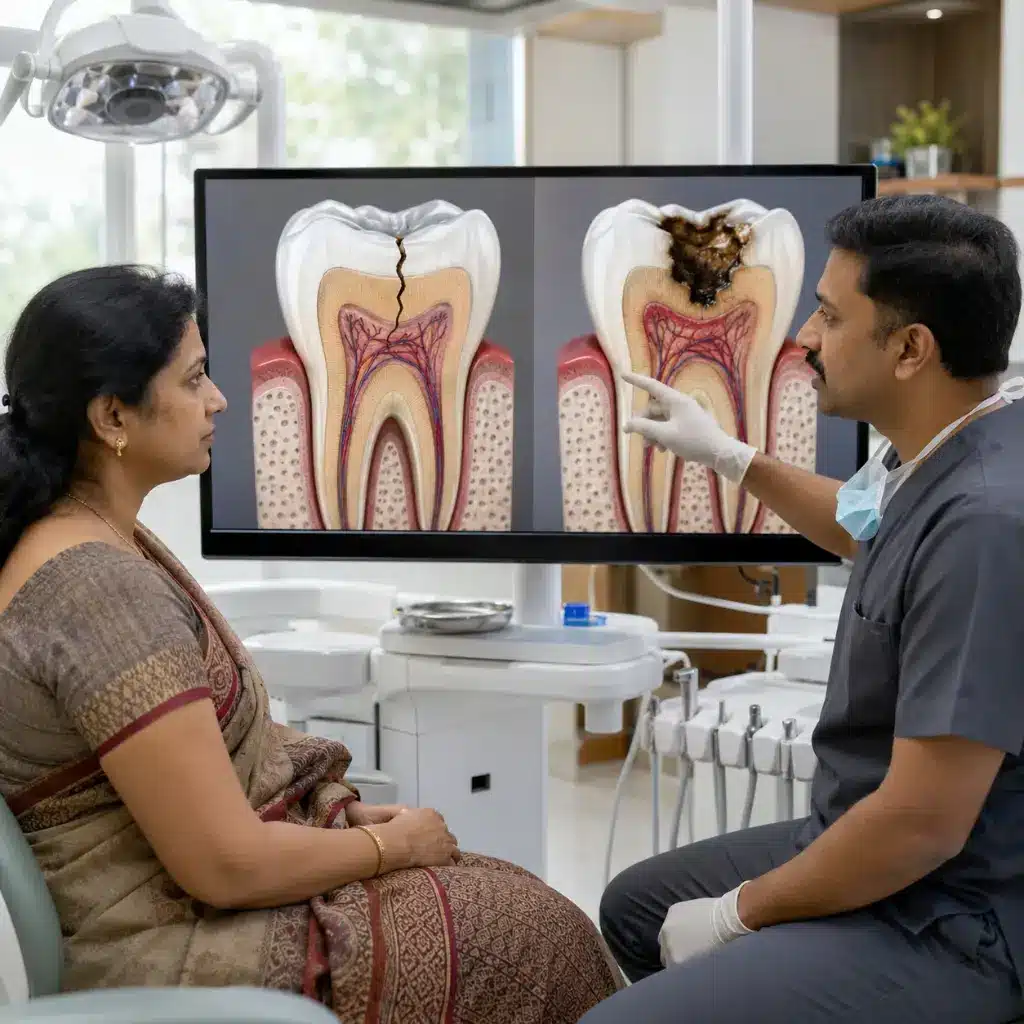
While only a dentist can confirm the cause, the pattern of discomfort often offers early clues. The table below shows how the two problems tend to differ.
| Sign | More typical of decay | More typical of a crack |
|---|---|---|
| Onset of pain | Gradual, builds over weeks | Sudden, often while biting |
| Pain pattern | Lingering ache, sensitivity to sweets | Sharp pain on biting, eases on release |
| Visible clue | Dark spot or hole in the tooth | Often no visible mark |
| Sensitivity | Hot, cold and sweet | Mainly pressure and cold |
These patterns are helpful pointers, not firm rules. The two often overlap, and a cracked tooth can also decay, which is why self-diagnosis at home is rarely reliable.
When Does Each One Need a Root Canal?
Here is the part that surprises many patients. The deciding factor is not whether the trouble began as a crack or as decay, but whether the pulp inside has become inflamed or infected. That is what truly calls for root canal treatment.
Decay needs a root canal once it has burrowed deep enough to reach the pulp. Although antibiotics may occasionally be prescribed when swelling or spreading infection is present, they cannot remove damaged pulp tissue or replace root canal treatment once the nerve has been affected. Similarly, a root canal for cracked tooth cases becomes necessary when the crack extends far enough to involve the nerve. If the problem is caught earlier, a simple filling or a crown may be all that is required. It is also fair to be honest that a very deep vertical fracture running into the root cannot always be saved. Catching either problem early through an assessment keeps your options open.

Why a Crown Often Follows a Cracked Tooth
There is one important difference in how the two are treated afterwards. A crack in a tooth does not heal or close up on its own, even after the infected pulp is removed. The structural weakness remains.
This is why a cracked tooth usually needs a dental crown once the root canal is complete. The crown holds the tooth together and protects it from splitting further under the pressure of everyday chewing. A decayed tooth may also receive a crown, but for a cracked tooth, this step is especially important, since it is the crown that gives the weakened tooth its strength back.
Do Not Wait to Find Out Which It Is
Because a crack and decay can feel so alike, guessing at home is rarely wise. The signs overlap, both problems tend to worsen if left alone, and a tooth that seems only mildly sensitive today can become a real source of pain later.
The most reliable way to identify the cause is a professional examination, often supported by digital X-rays and other diagnostic tests. If you have been living with persistent sensitivity or pain while biting, booking a consultation at Vetri Dental Clinic in Tirunelveli will give you a clear answer rather than guesswork.
Conclusion
Whether your trouble began as a hidden crack or as slow tooth decay, the need for a root canal ultimately comes down to one thing: the health of the pulp inside. Both paths can lead to the same treatment, and both respond best when caught early. Rather than trying to identify the cause yourself, treat lingering pain or sensitivity as a signal to get checked. If something feels wrong with a tooth, the team at Vetri Dental Clinic in Tirunelveli is always ready to help you find the cause and protect your smile.