

Introduction
Being told you have lost bone in your jaw can feel like a door quietly closing. Many patients hear those words and assume that implants are now out of reach for them. The good news is that this assumption is usually mistaken. Dental implants with bone loss are a well-understood situation in modern dentistry, with established ways to work around the problem rather than a simple dead end. Many people exploring implant treatment options in Tirunelveli are surprised to discover that bone loss does not automatically rule out treatment. A careful assessment frequently reveals a much fuller picture and more options than they expected.
What Bone Loss Means for Implants
To see why bone matters so much, it helps to understand what an implant actually needs. An implant is a small post placed into the jaw, where it must be gripped firmly by surrounding bone to stay stable and bear the force of chewing. The bone is its anchor.
When that bone has thinned or reduced in height and width, there may not be enough of it to hold an implant securely in the usual way. This is the central challenge. It does not mean an implant is impossible, but it does mean the foundation must be carefully evaluated and, where needed, strengthened before treatment can go ahead.
Understanding the Extent of Bone Support Available
When considering dental implants with bone loss, the key question is not simply why the bone has reduced but how much support remains for treatment. The amount, shape, and quality of the available bone all help determine which implant options are suitable.
This is why careful assessment plays such an important role. Some patients retain enough bone for straightforward implant placement, while others may require additional planning before treatment can proceed. Understanding the available support helps determine which treatment approach is likely to provide the most stable and predictable outcome.
How Much Bone Loss Is Too Much?
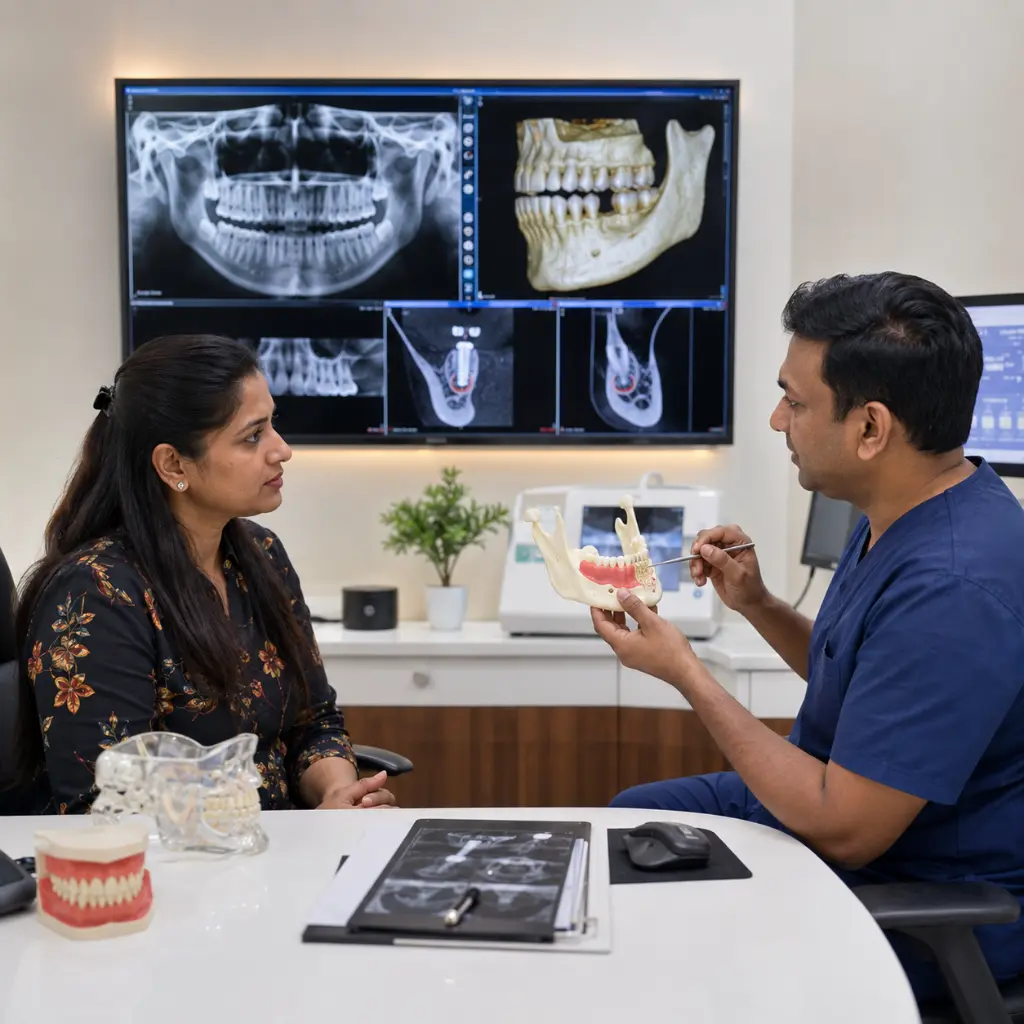
There is no universal measurement that automatically rules out implant treatment. The amount of remaining bone, its location, and its quality all influence what options are available.
Cases involving mild bone loss are often straightforward, while more advanced situations may require additional preparation or specialist techniques. What matters most is selecting an approach that matches the condition of the jaw rather than focusing on the amount of loss alone.
Solutions That Rebuild Support
Where the foundation needs help, dentistry offers a range of solutions to suit different degrees of loss.
Grafting and sinus lift
In many cases, bone grafting adds volume back to a thinned ridge, giving an implant the support it needs. In some areas of the upper jaw, the sinus may sit very close to the available bone. A sinus lift helps create the space needed to support future implant treatment. Both are well-established preparatory steps that quietly do the groundwork.
Implants for severe cases
When bone loss is more advanced, specialist implant techniques may sometimes be considered to provide adequate support for treatment. The most suitable approach depends on the individual assessment and the amount of available bone. Rather than relying on the thinned jawbone, these longer implants anchor into the dense cheekbone above, providing firm support where the jaw alone cannot. They make treatment possible for cases once considered too difficult.
How Dentists Measure Bone for Implant Planning
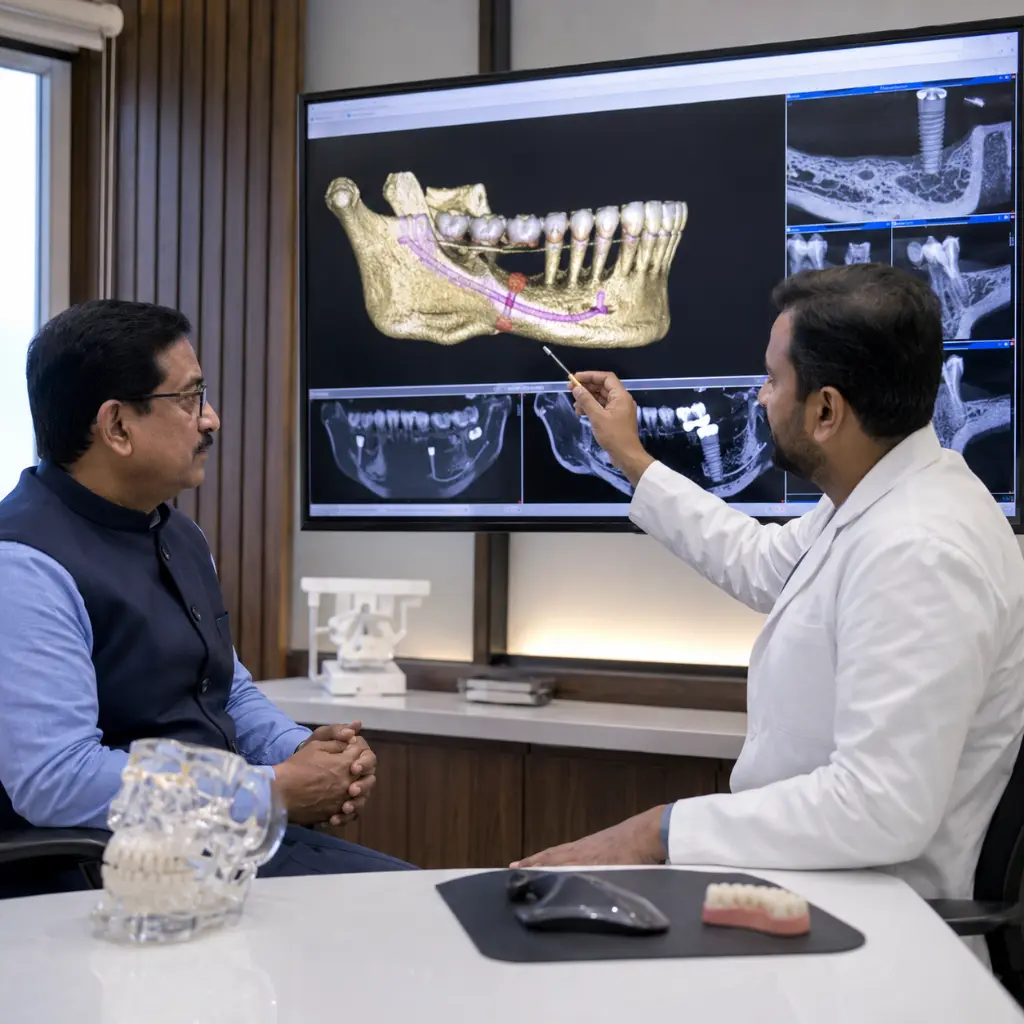
None of this can be judged by eye alone, which is why a detailed assessment comes first. The key tool is a 3D scan of the jaw, which shows far more than an ordinary X-ray. It reveals the precise height, width and density of the bone in each area being considered for an implant.
A patient’s overall health is also taken into account, particularly conditions such as diabetes, which can influence healing and long-term implant success.
With this information, the dentist can map out exactly what is possible before any treatment begins, identifying where bone is sufficient and where it needs building up. This planning stage is what turns uncertainty into a clear, realistic path. This level of assessment allows treatment decisions to be based on clear clinical information rather than guesswork.
Why Acting Sooner Helps
There is a quiet advantage to not waiting. Bone loss, once it begins, tends to continue gradually over time. This is one reason why patients who have been living with a missing tooth for living with a missing tooth for many years are often encouraged to have the area assessed before planning implant treatment.
The more healthy bone that remains when you are assessed, the simpler and more direct your treatment is likely to be.
Acting sooner, therefore, tends to widen your options rather than narrow them, often making involved procedures less necessary. This is not a reason to feel rushed, but it is a gentle case for seeking advice rather than putting it off. An early conversation with the team at Vetri Dental Clinic can help you understand where you stand while you still have the most choices open.
When Additional Implant Planning May Be Needed
Not every case of bone loss requires the same approach. While some patients can proceed directly to implant placement, others benefit from additional planning to create the best possible conditions for long-term success.
The degree and location of the bone loss help guide these decisions. In some situations, preparatory procedures may be recommended before an implant is placed, while more advanced cases may call for specialist techniques. The aim is to choose an approach that offers reliable support and long-term function for the specific condition of your jaw.
Conclusion
For most people, bone loss is a challenge to be planned around rather than the end of the road. Dental implants with bone loss are frequently possible once the foundation has been properly assessed and rebuilt, where necessary. Even severe cases now have specialist routes such as zygomatic implants. If you have previously been told that implants are not possible, it may still be worth seeking a more detailed evaluation. Modern techniques have expanded the options available to many patients who were once considered unsuitable candidates.