

From Our Dentists: Key Points
- Children’s teeth are more vulnerable to sugar damage than adult teeth. Decay can progress very quickly in milk teeth.
- It is not just chocolate. Cream biscuits, flavoured drinks, fruit juices, and Indian sweets are equally damaging.
- The pattern of eating matters as much as the amount. Constant snacking throughout the day is more harmful than eating sugar in one sitting.
- Parents often do not notice early decay until it is already quite advanced. Regular check-ups allow us to catch it early.
- We recommend bringing your child for their first dental visit by age 2 to 3, and every 6 months after that.
What We See When Parents Bring Their Children to Us
Parents regularly bring their children to Vetri Dental Clinic with a version of the same concern. “Doctor, my child eats a lot of chocolate. He also loves Marie biscuits and flavoured milk. Now I can see some dark spots on his teeth. Is it serious?”
In many cases, by the time the parent notices something visually, there is already decay that needs attention. Children do not always complain of pain in the early stages, so the first visible sign parents see is often not the beginning of the problem.
We are not here to make parents feel guilty. We are here to help. But we do want to be honest: the foods most children eat daily are among the most damaging things possible for their teeth, and parents are often not fully aware of the mechanism behind it.
Why Sugar Damages Milk Teeth So Quickly
Milk teeth, also called baby teeth or deciduous teeth, have thinner enamel than permanent adult teeth. This means the outer protective layer is less robust. When sugar from food and drink is broken down by bacteria in the mouth, it produces acid. That acid attacks the enamel. In milk teeth, this process moves faster.
What many parents do not realise is that it is not the amount of sugar in one sitting that matters most. It is the frequency of sugar exposure throughout the day. A child who eats a whole chocolate bar at once gives the mouth one acid attack to recover from. A child who nibbles cream biscuits every hour between meals gives the mouth six, eight, ten acid attacks with barely any recovery time in between.
The second pattern is what we see in most of our young patients with early decay.
It Is Not Just Chocolate: The Snacks We See Causing the Most Damage
In our experience at this clinic, parents focus a lot of attention on chocolate as the problem. But in our day-to-day practice, the snacks causing the most tooth damage children are:
- Cream biscuits eaten slowly after school, one after the other, often paired with flavoured milk or a fruit drink
- Sweet biscuits and glucose biscuits, which dissolve into a sticky paste that clings to the grooves of back teeth
- Packaged fruit juices and flavoured milk drinks, which parents often consider healthier than sodas but contain high amounts of sugar
- Indian festival sweets such as laddu, halwa, and mysore pak, particularly when children snack on them repeatedly over several days during festivals
- Sticky toffees and chewy sweets, which cling to tooth surfaces for a long time after eating
We are not asking you to eliminate these from your child’s life. We are asking you to be aware of them and manage the frequency and timing.
Early Warning Signs Parents Should Watch For
Children often do not tell you when something is wrong with their teeth. Either they do not notice the pain yet, or they do not connect the feeling in their tooth to something a dentist needs to see. Here is what to look for at home:
- White or chalky patches on the tooth surface, especially near the gum line, which are often the very first visible sign of enamel weakening
- Brown or dark spots on the biting surfaces of the back teeth, particularly in the grooves
- Any complaint about a tooth hurting when eating something sweet or cold
- A bad smell from the mouth even after brushing, which can indicate active decay
- Your child avoiding chewing on one side of the mouth
If you notice any of these, bring your child in. Do not wait for the next scheduled visit.
What We Tell Parents to Do at Home
We understand that changing a child’s eating habits entirely is very difficult, especially when grandparents and extended family are also involved in feeding the child. Our advice is practical, not idealistic.
Set fixed snack times instead of grazing
If your child has chocolate or biscuits, ideally do it once a day and at a set time rather than throughout the day. This limits the number of acid attacks the teeth face.
Give a water rinse after every sugary snack
You do not need to make the child brush after every snack. But a few mouthfuls of plain water after eating sweet things helps wash away sugar and reduces the acid exposure time significantly.
Brush before bed without fail
Saliva flow drops significantly during sleep, which means the mouth has less natural protection at night. Any sugar left on the teeth before bed sits there for hours. Brushing before bed is, in our view, the single most important home habit for children. If you’re unsure whether your child is brushing effectively, you may also find our guide on choosing the right brushing tools for children helpful.
Avoid flavoured drinks between meals
Water and plain milk are the best drinks for children between meals. Keep sweet drinks, including packaged fruit juices, for mealtimes only rather than as a constant accompaniment throughout the day.
When Should You Bring Your Child to the Dentist?
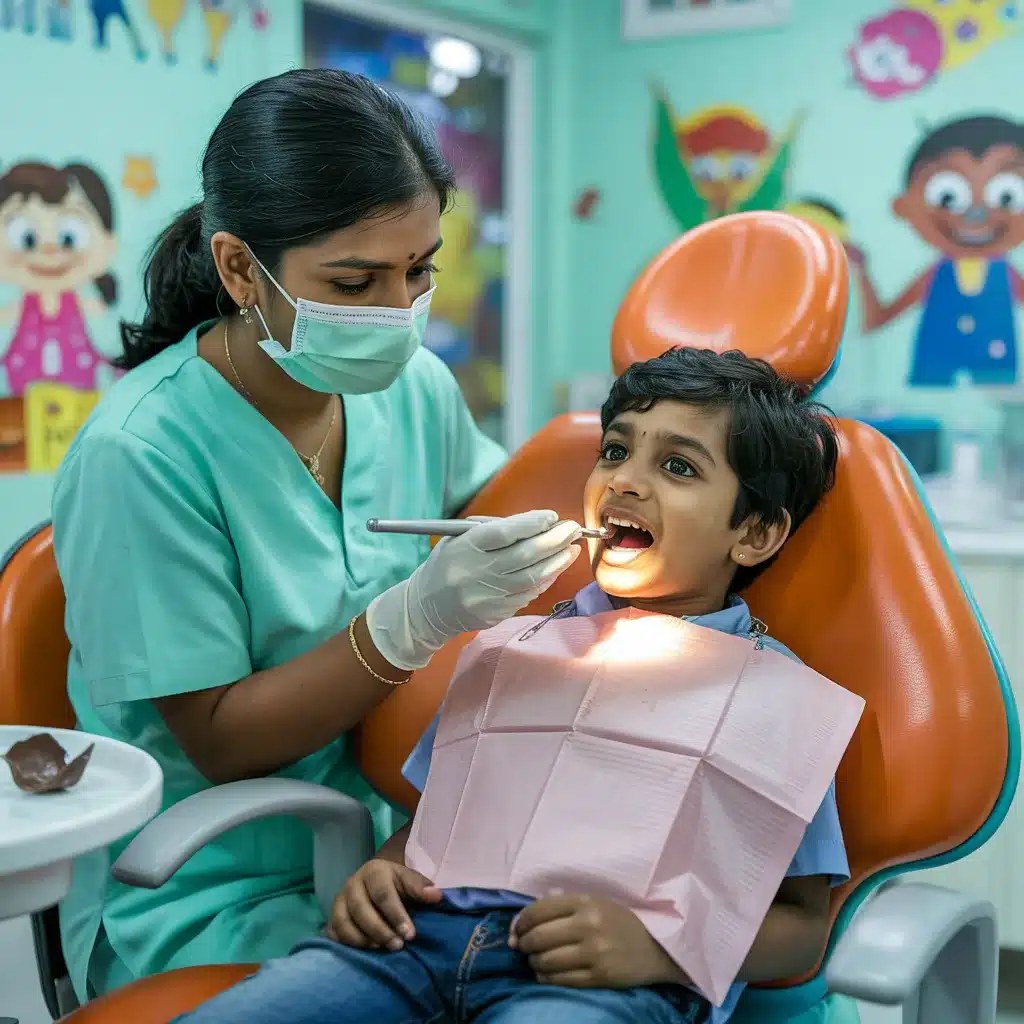
We recommend that children have their first dental visit between ages 2 and 3, before any visible problem appears. This first visit is not about treatment. It is about getting your child comfortable with the dental environment, and allowing us to check that development is happening normally.
After that, a check-up every 6 months is our standard recommendation. If your child eats a lot of sugary snacks and drinks, or if you have noticed any of the warning signs we described above, come in sooner.
We work hard to make dental visits as gentle and reassuring as possible for children. A child who has a positive experience with us early on is a child who will not be anxious about dental care for the rest of their life.
A Note from Our Team:
We see the effects of childhood tooth decay regularly at our clinic, and the vast majority of cases were preventable. We do not judge any parent for this. Changing food habits is hard. But we do ask you to bring your child in regularly so we can catch any early signs and guide you on what to do.
Your child’s milk teeth play an important role. They hold space for the adult teeth developing underneath. If a milk tooth is lost too early due to decay, it can affect how the adult teeth come through. Many parents don’t realise how significant this impact can be.
| Is Your Child Due for a Dental Check-Up? At Vetri Dental Clinic, we make dental visits comfortable and stress-free for children. If it has been more than 6 months since your child’s last check-up, or if you have noticed something concerning, bring them in. Early detection makes treatment simple. Book Your Child’s Appointment at Vetri Dental Clinic |