

Introduction
Dental implants are among the most reliable and long-lasting ways to replace a missing tooth. Yet like natural teeth, they depend on healthy tissue around them, and that tissue can occasionally become infected. Knowing the signs of dental implant infection early is the single best way to protect the investment you have made in your smile. People who have received dental implant treatment in Tirunelveli sometimes notice small changes, such as tenderness, bleeding, or irritation around an implant, and wonder whether they really matter. In many cases, they do. Having these changes assessed early often makes treatment simpler and helps prevent more serious complications from developing.
When an Implant Becomes Infected
A common misunderstanding is that the metal implant itself becomes infected. In truth, the implant cannot decay or fall ill. What becomes infected is the gum and bone surrounding it, much as gum disease affects the tissues around a natural tooth.
Dentists describe this in two stages. The early stage, where only the gum is inflamed, is called peri-implant mucositis and is usually reversible. If it is left unchecked and the infection reaches the supporting bone, it becomes peri-implantitis, a more serious condition that can loosen the implant over time. Understanding this difference explains why early attention matters so much.
Early Warning Signs of Implant Infection
The trouble with early infection is how easily it is brushed aside. The first hints are often mild and painless, which is exactly why they get ignored. Being alert to these dental implant infection symptoms allows you to act before things progress:
- Changes in gum colour, swelling, or sensitivity around the implant site
- Bleeding when brushing or cleaning near the implant
- Ongoing bad breath or a lingering unpleasant taste in the mouth
- Ongoing discomfort or a dull throbbing around the implant
- Pus or any discharge near the gum line
- The implant begins to feel loose, in more advanced cases
A single symptom may not always indicate infection, but persistent or multiple signs should not be ignored. Addressing concerns sooner generally makes treatment more straightforward.
What Causes the Infection
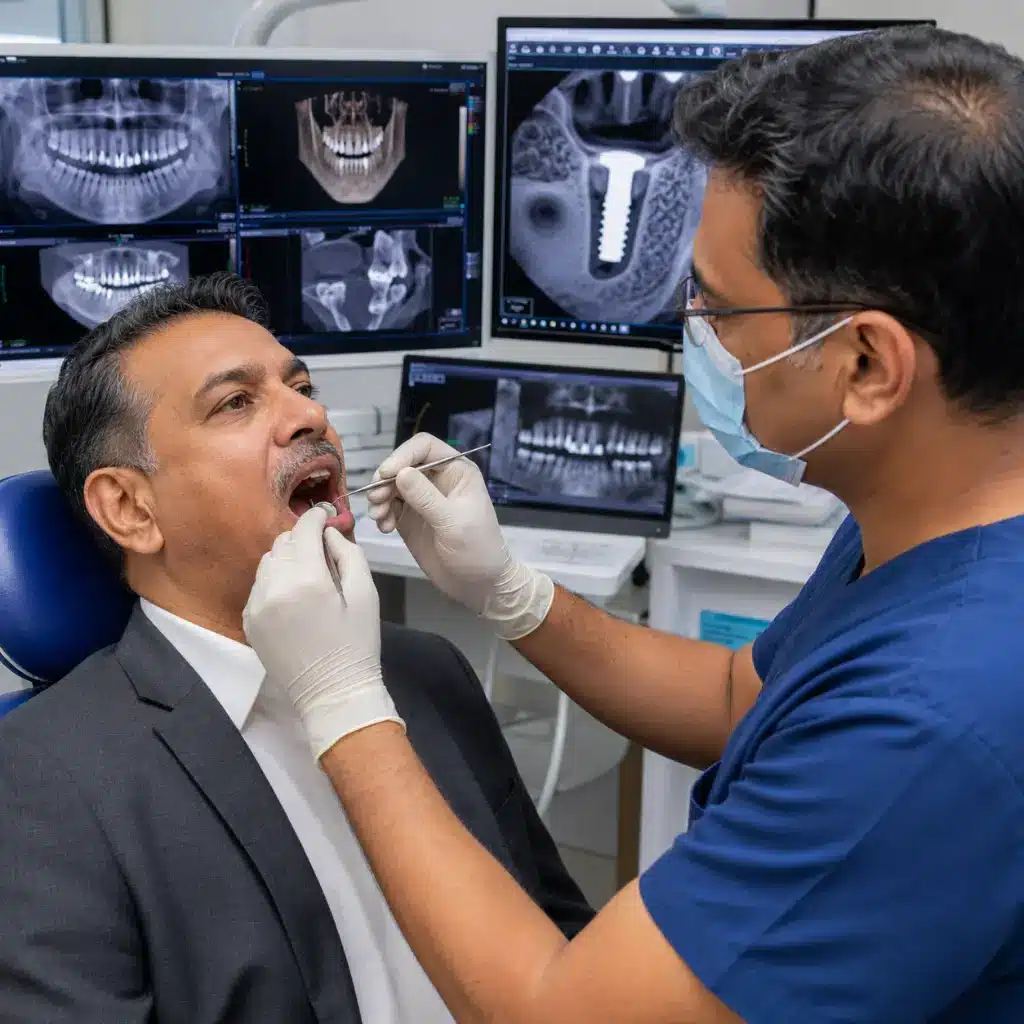
In the vast majority of cases, the root cause is bacteria. When plaque is allowed to build up around the implant because cleaning has not been thorough enough, the bacteria within it irritate and infect the surrounding gum. This is the same process that drives gum disease around natural teeth.
Certain factors raise the risk further. Smoking interferes with healing and gum health, poorly controlled diabetes can make infection more likely, and existing gum disease elsewhere in the mouth provides a reservoir of bacteria. Habitual teeth grinding can also place excess stress on an implant. Recognising these helps explain why an infected dental implant develops in some people more than others.
How a Dentist Diagnoses It
Diagnosing the problem is a careful but straightforward process. The dentist begins by examining the gum around the implant, looking for redness, swelling and any discharge. The implant is gently checked for any sign of movement, since a stable implant should not budge at all.
The depth of the gum pockets around the implant may be measured gently to gauge how the tissue is attached. An X-ray is often taken to see whether the bone supporting the implant has been affected. These findings help determine whether the infection is limited to the gum tissue or has begun affecting the supporting bone.
Treatment Options That Help

The good news is that treatment is effective, especially when started early, and is matched to how far the infection has progressed.
Cleaning and non-surgical care
For earlier cases confined to the gum, a thorough professional cleaning around the implant is often enough. This removes the plaque and bacteria that are driving the inflammation, and an antimicrobial rinse may be advised to support healing at home. Many cases settle well at this stage.
Surgical and advanced treatment
When infection runs deeper, the dentist may need to access and clean the implant surface more thoroughly, sometimes using laser-assisted cleaning to decontaminate the area gently. Where bone has been lost around the implant, procedures to regenerate it can help restore support. In honesty, a severely affected implant occasionally cannot be saved and may need to be removed, though this is very much a last resort. The most appropriate treatment depends on how advanced the infection is and how much support around the implant has been affected.
Preventing Future Implant Infections
Preventing infection begins with controlling the plaque and bacteria that collect around the implant. Thorough daily cleaning along the gum line remains the most effective defence, and special brushes or cleaning aids can help reach areas that are harder to access.
Professional maintenance is equally important. Regular dental reviews allow early changes around the implant to be identified before they become more serious. Understanding the normal dental implant healing timeline can also help patients recognise the difference between expected healing changes and symptoms that may require professional attention.Just as importantly, patients should stay alert to warning signs such as bleeding, swelling, tenderness, or persistent bad breath around the implant.
Conclusion
A dental implant infection can sound alarming, but it is very manageable when caught early. Knowing the signs of dental implant infection, from tender gums to bleeding or a loose feeling, puts you in the strongest position to protect your smile. The key is never to wait and hope. If you have an implant and have noticed anything unusual around it, the team at Vetri Dental Clinic in Tirunelveli would be glad to take a look and set your mind at ease.