

Introduction
It is common for babies to occasionally sleep with their mouths open, especially when they have a blocked or stuffy nose. However, if a baby regularly sleeps with their mouth open, it may be linked to ongoing mouth breathing and could affect their teeth, jaw and facial development over time. Understanding the possible reasons and signs can help parents know when a dental check-up may be needed. Understanding the possible reasons and signs can help parents know when children’s dental care in Tirunelveli may be needed.
Why do babies sleep with their mouths open?
Babies may sleep with their mouths open for different reasons. A blocked nose, developing nasal passages and changes in breathing during sleep can sometimes make it difficult for them to breathe comfortably through their nose.
Nasal congestion
Babies can develop a blocked or stuffy nose due to colds, allergies or their naturally narrow nasal passages. When the nose is blocked, breathing through it can become difficult, so the baby may breathe through the mouth while sleeping.
Developmental factors
Babies have smaller and less developed nasal passages compared with older children and adults. Even a small amount of mucus can make their nose feel blocked. Their breathing patterns are also still developing, which may sometimes affect how they breathe during sleep.

Sleep stages and mouth breathing
A baby’s breathing pattern can change during different stages of sleep. Muscle relaxation and changes in airflow may sometimes cause a baby to sleep with their mouth open. This can happen occasionally even when the baby does not have obvious nasal congestion.
Potential Consequences of a Baby Sleeping With Their Mouth Open Long-Term
Occasionally sleeping with the mouth open may be temporary, especially when a baby has a blocked nose. However, if mouth breathing continues regularly for a long time, it may be linked to sleep, breathing, dental and developmental concerns.
Some possible effects include:
Sleep problems: Persistent mouth breathing may be associated with restless sleep, snoring, poor sleep quality, drooling and sleep-related breathing problems.
Breathing difficulties: Mouth breathing may be linked with breathlessness, getting tired easily during physical activity and a dry mouth. With less saliva to rinse the teeth, plaque can settle more easily, which is a common reason for yellow teeth as they come through.
Dental and jaw development: Long-term mouth breathing may affect tooth alignment and facial development. It can be associated with problems such as malocclusion, where the upper and lower teeth do not align properly.
Speech difficulties: Persistent mouth breathing may be associated with speech sound problems in some children.
Developmental concerns: In older children, ongoing mouth breathing may be associated with irritability, difficulty concentrating and certain learning-related difficulties.
If your baby regularly sleeps with their mouth open, it is better to discuss the pattern with a paediatrician or appropriate healthcare professional to identify the possible cause.
What to Do If My Baby Sleeps With Their Mouth Open?
Remove Mucus Before Sleeping and Feeding
If your baby has a blocked nose, gently clearing excess mucus before feeding and sleeping may help them breathe more comfortably. Saline drops can help loosen thick mucus, while a bulb syringe or similar device can be used gently to clear the nose.
Use a Humidifier or Steam
A cool-mist humidifier in the baby’s room may help relieve nasal stuffiness and make breathing through the nose easier. Keep the humidifier at a safe distance from the baby’s sleeping area and follow the manufacturer’s instructions for cleaning and use.
Steam may also help with congestion. You can sit with your baby in a steamy bathroom for a short time while keeping them comfortable. If your baby becomes uncomfortable or overheated, leave the room.
Keep Your Baby Hydrated
Keeping your baby properly hydrated can help when mouth breathing is related to nasal congestion. Good hydration can help prevent dehydration and may help loosen mucus, making breathing more comfortable during feeding and sleep. As children grow, drinking enough water also keeps saliva flowing and helps prevent the dry mouth that can leave a lingering bitter taste .
When to See a Dentist
Occasional mouth breathing may happen when a baby has a cold or nasal congestion and may not always be a cause for concern. Parents can observe the baby’s mood, energy levels, feeding and wet nappies for any noticeable changes.
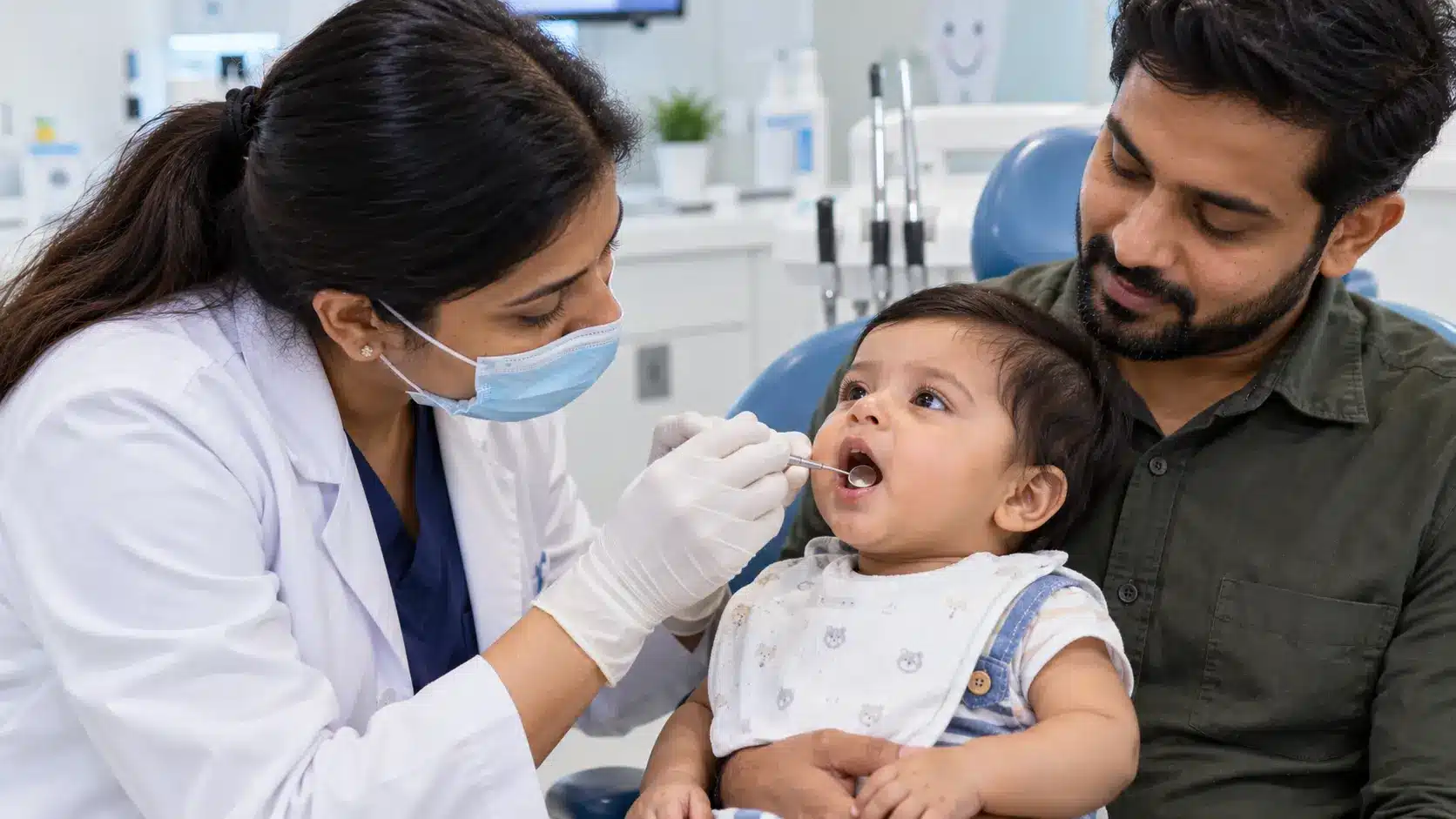
If your baby continues to breathe through their mouth during the day and while sleeping, even after the congestion has cleared, it is advisable to consult a dentist. A dentist can check whether persistent mouth breathing is affecting the development of the baby’s teeth, jaw or facial structure and advise whether further assessment is needed.
Conclusion
In short, babies may sleep with their mouths open occasionally. However, if this happens frequently, it may indicate an underlying issue that needs attention. Persistent mouth breathing can affect the development of the teeth, jaw and facial structure, so it should not be ignored.
Parents should monitor their baby’s breathing during sleep and consult a dentist if mouth breathing continues regularly. At Vetri Dental Care Centre in Tirunelveli, dentists can assess the baby’s oral development and check for any possible effects on the teeth and jaw.